

A Brief History of Flow Blue China
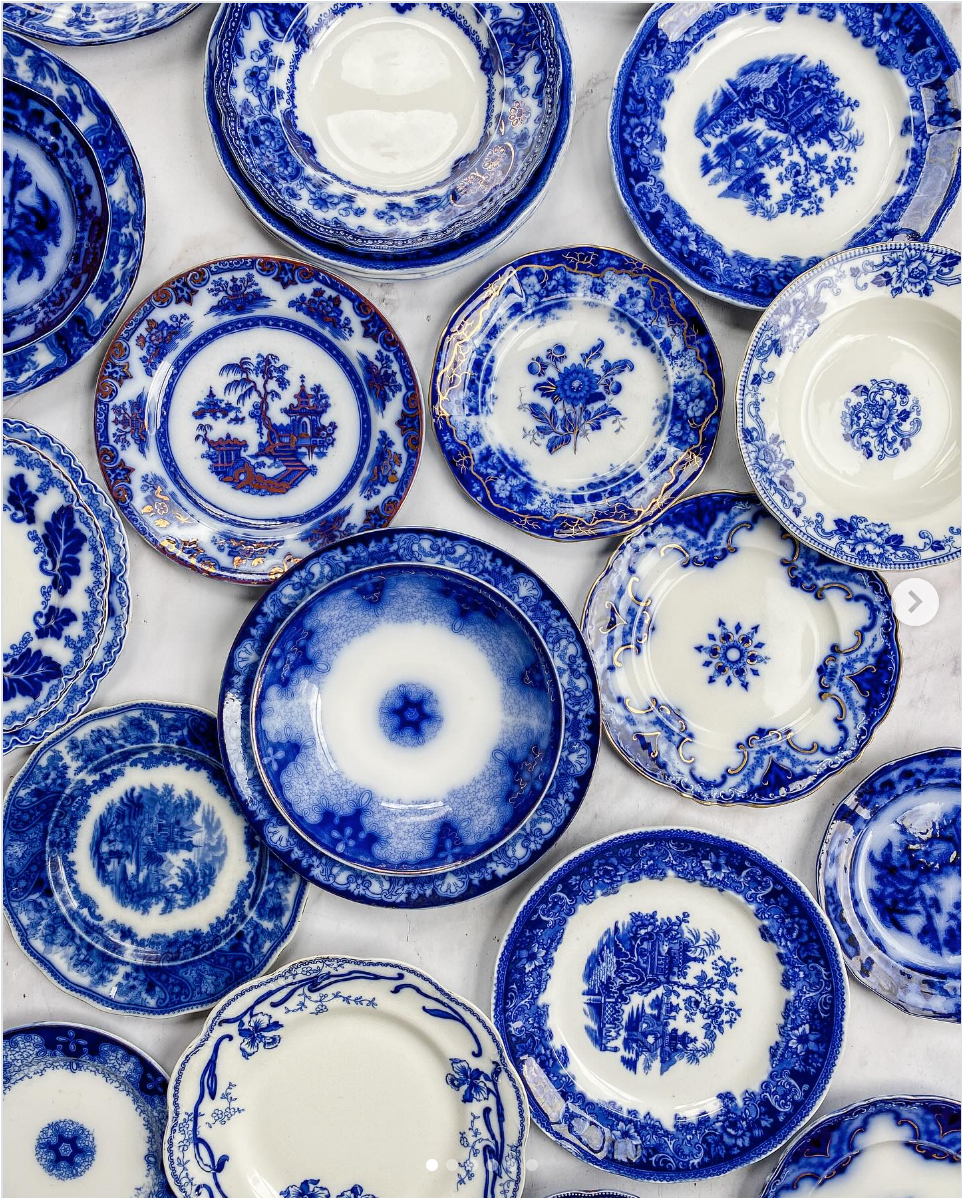
image via Laurel Leaf Farm
A “Happy Accident”
The story of the highly collectible Flow Blue china has often been called a “happy accident” because of the way the process was discovered and then became a highly sought after design.
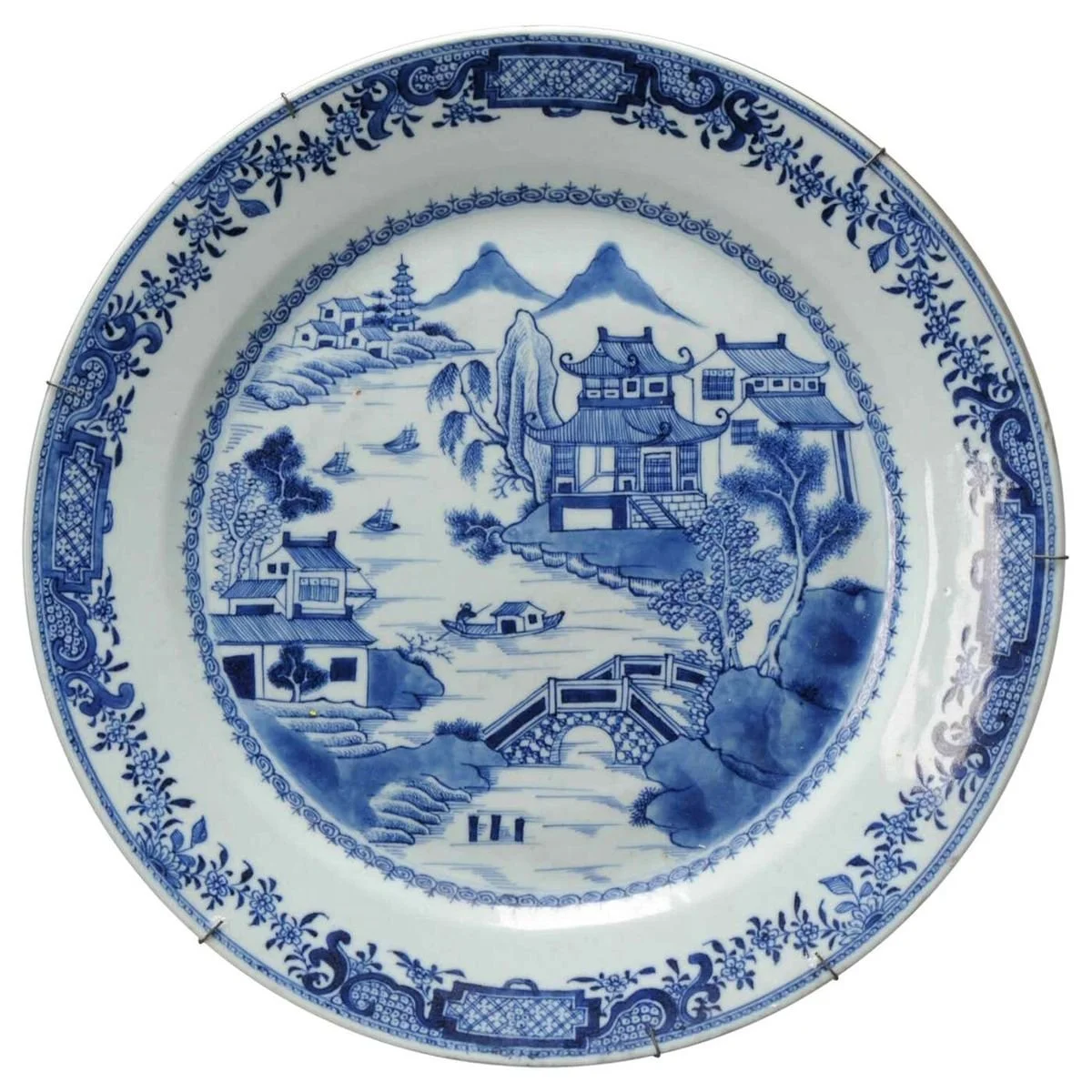
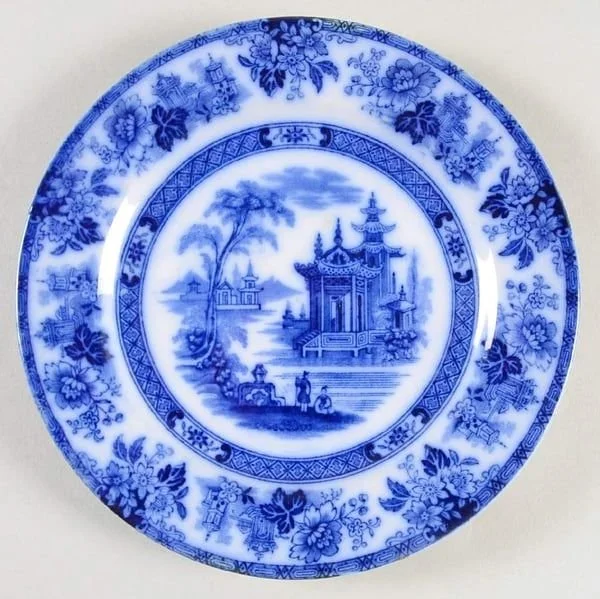
The style originated in England in the 1800s as English pottery companies did their best to recreate the popular porcelain designs being imported from China. In doing so, they developed a type of earthenware that was whiter than other pottery and looked a bit more like porcelain. Rather than hand painting the pieces, designs were transferred from a metal plate to a blank white object. This became known as transferware.
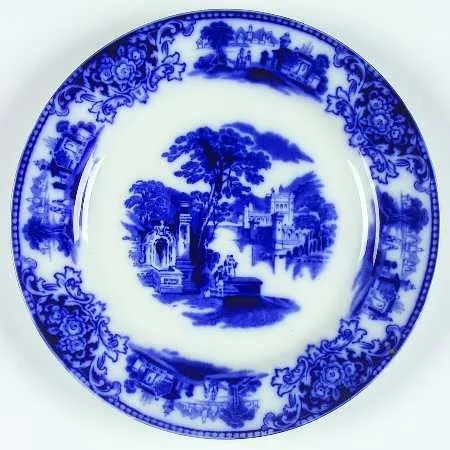
Early Flow Blue china plate
In keeping with the Chinese designs, cobalt blue ink was used. However, during the firing process, the ink “flowed” a bit which resulted in a softened design and therefore became known as “Flow Blue.” There are different theories as to whether this process was intentional or accidental, but either way, people loved the watercolor effect and it became quite the craze. Potteries began producing more and more and shipped the newly created designs all over the world—most especially to America.
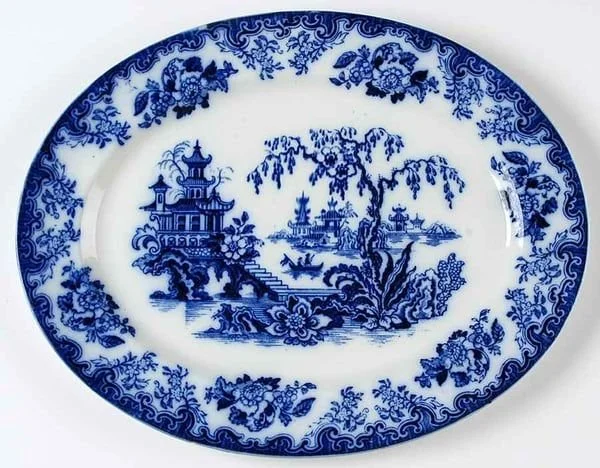
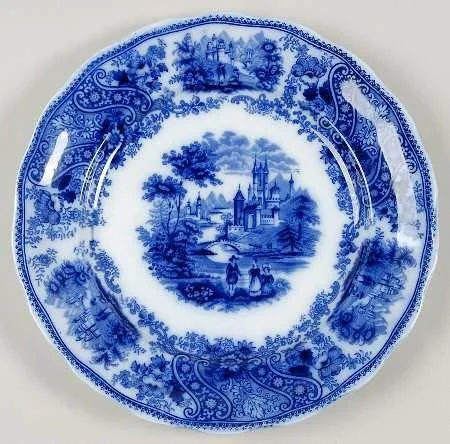
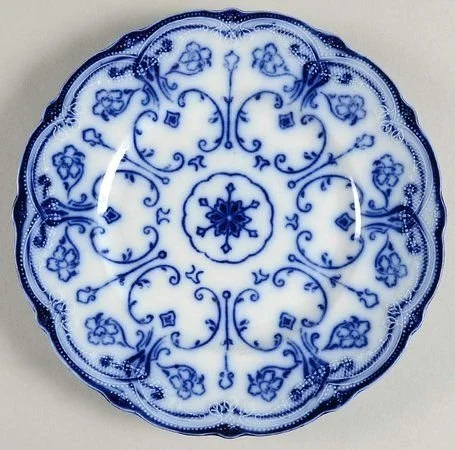
Elements of Design
The designs of the Flow Blue pieces evolved over time and can often help to determine the age of the piece:
1830 - 1860 — The first designs usually incorporate Oriental patterns and have a deep cobalt blue on ironstone.
1860 - 1865 — Patterns reflect floral or nature motifs often depicting pastoral settings in England and were sometimes trimmed in gold
1885 - 1920 — Floral and Art Nouveau designs sometimes on “semi-porcelain” rather than ironstone and often incorporating beading or embossing.
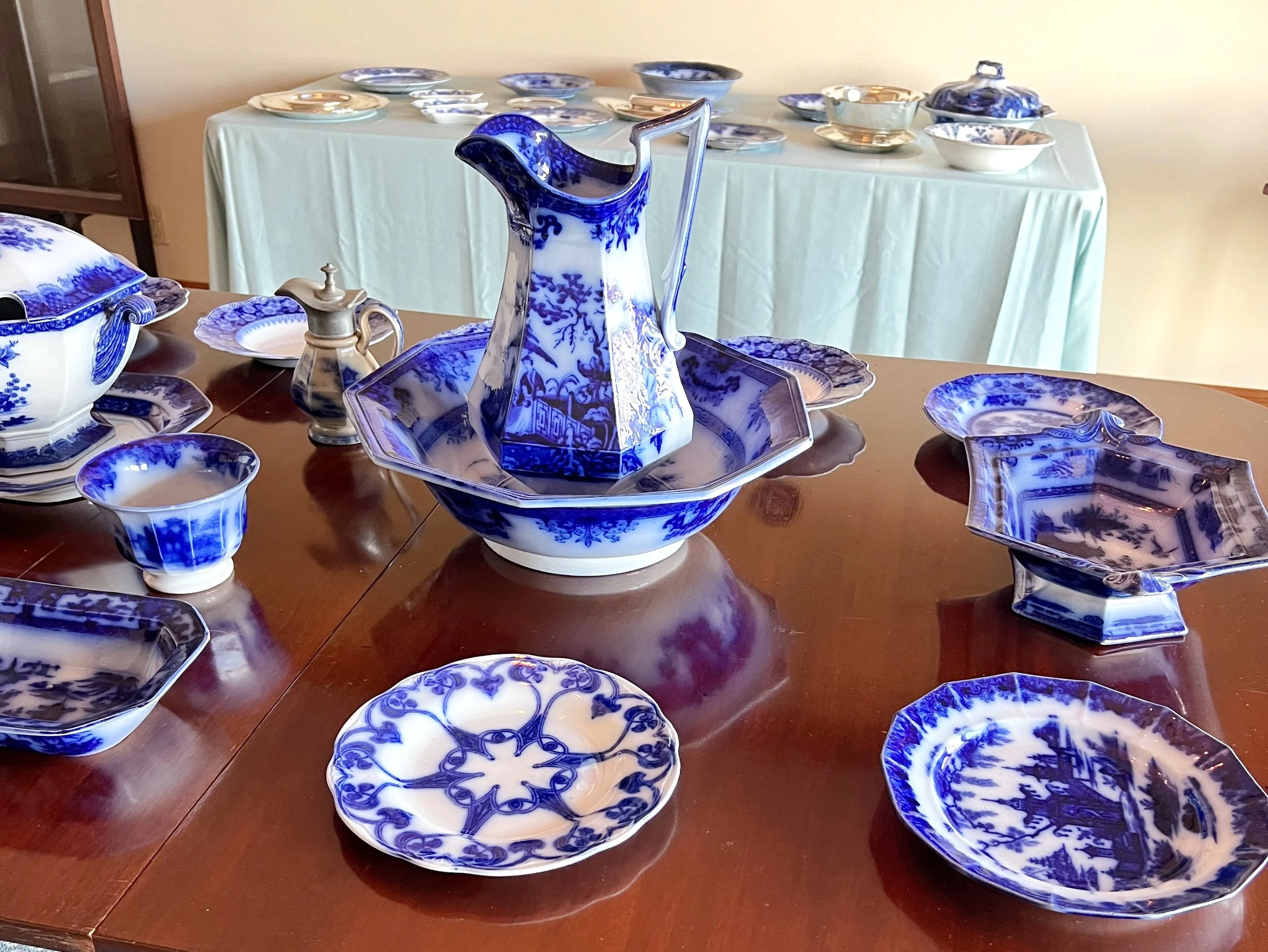
Stash Estates, January 30 - February 1
If this has inspired you to own your own piece of Flow Blue, we have a wonderful collection on offer at our upcoming sale—everything from everyday pieces to some that belong in a museum. We hope you’ll check them out!