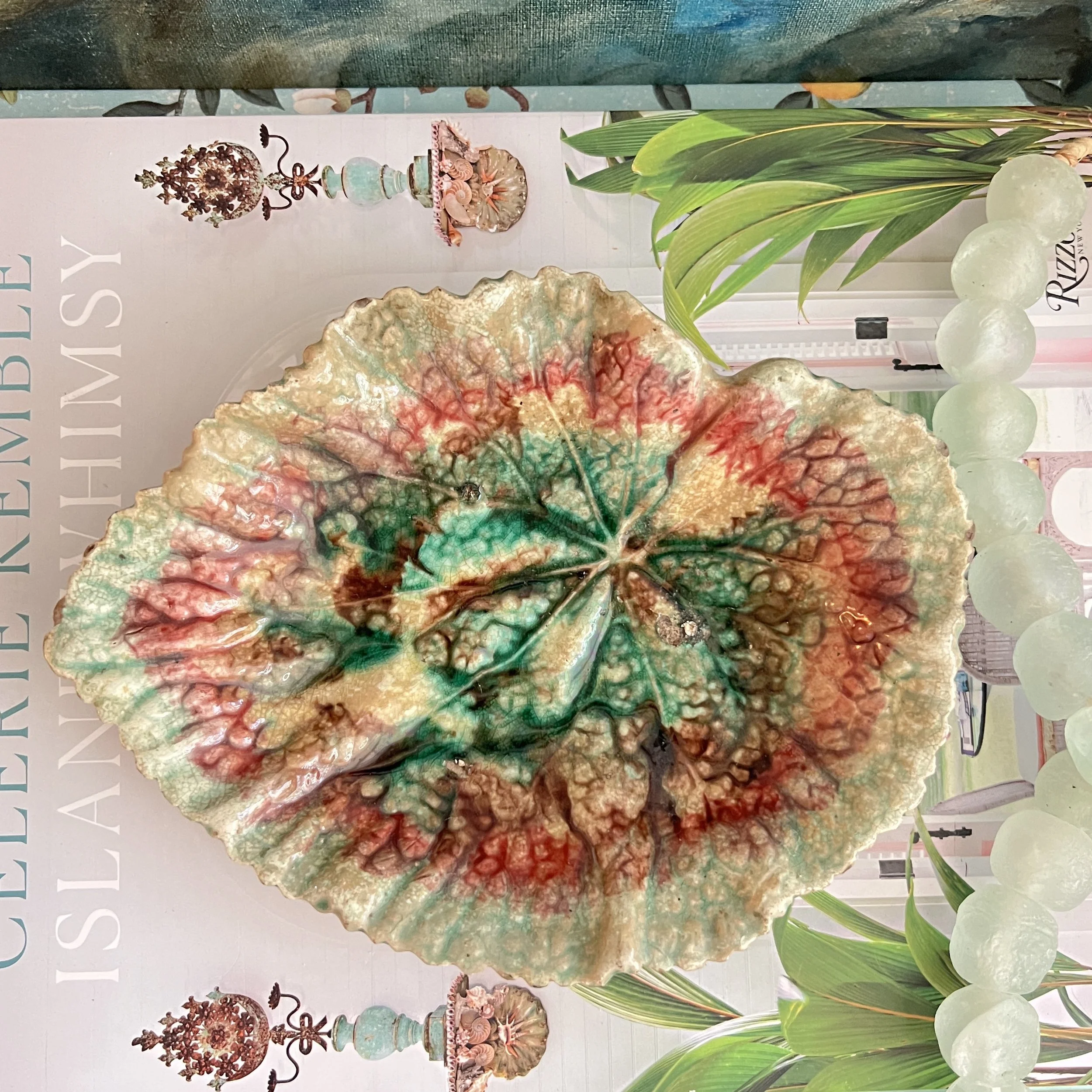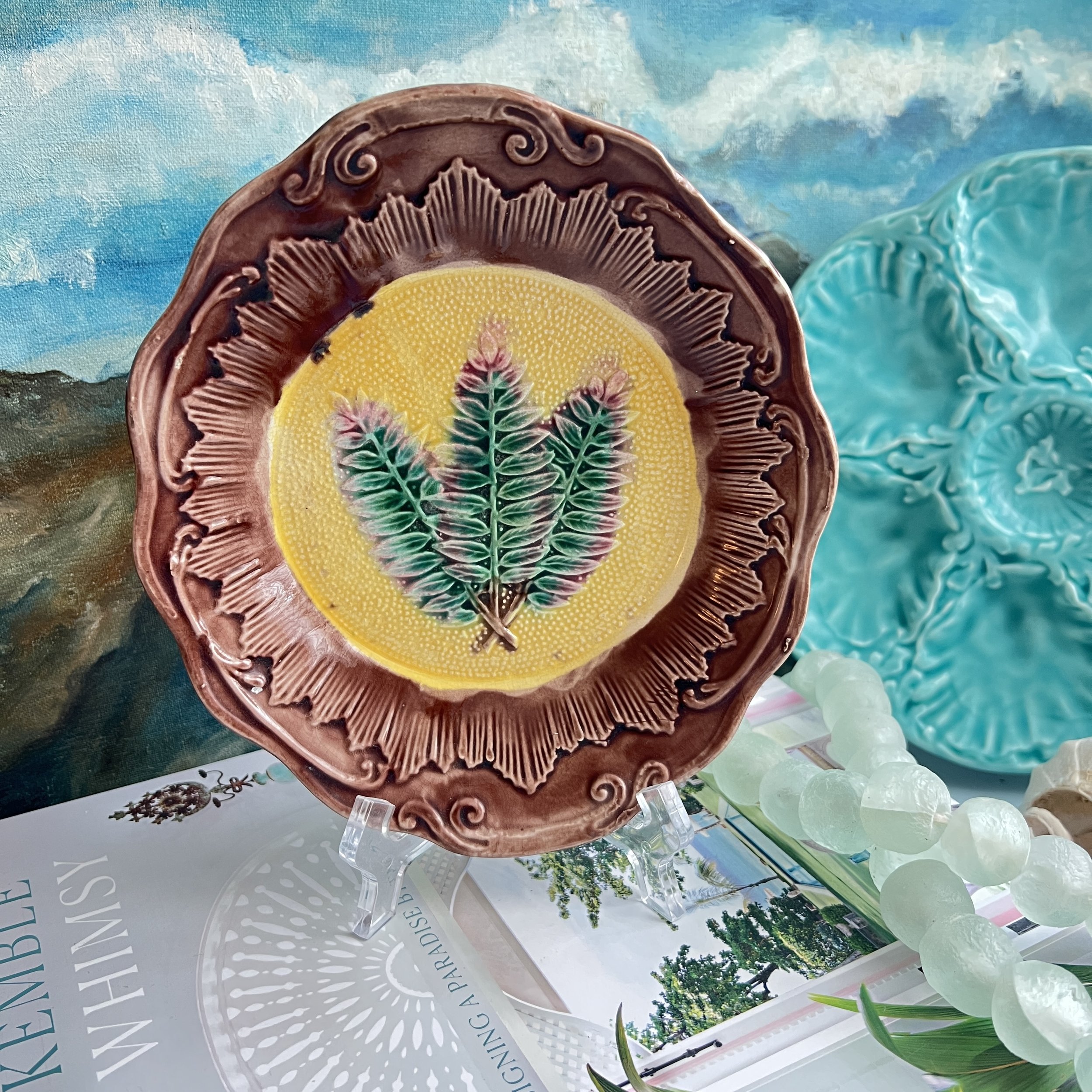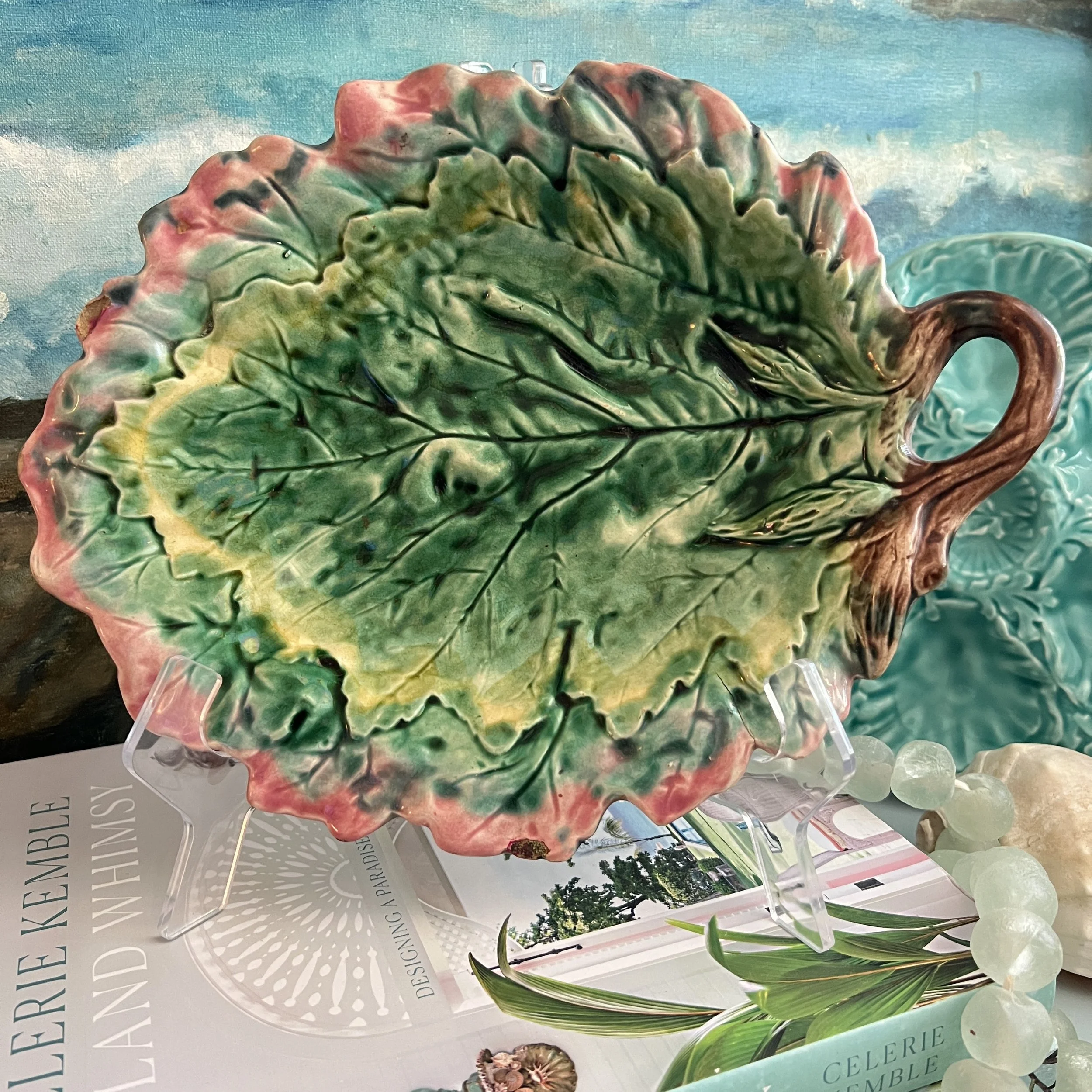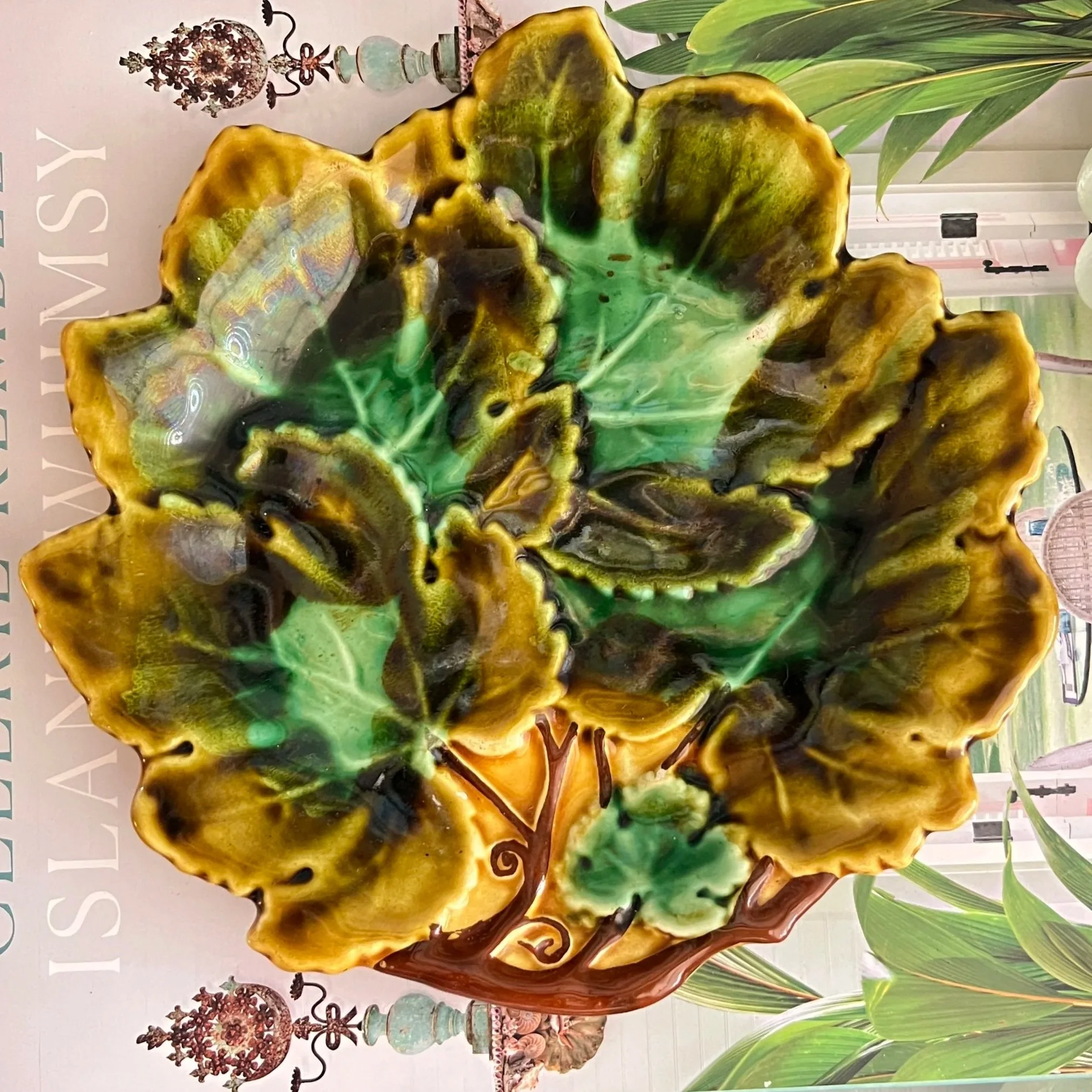

The Allure of Majolica
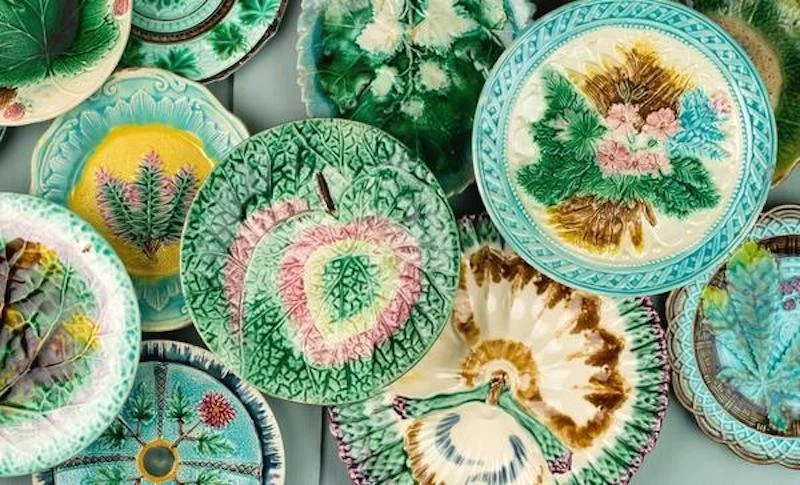
Admired by collectors for its vibrant colors and often unique shapes, majolica pottery has its origins, like many ceramics, in a search to make pieces that imitate the beauty of porcelain without the expense and fragility.
Types of Majolica
The term “majolica” can be used for two different types of pottery using different methods to achieve the desired effect.
Early Tin Glazed Majolica
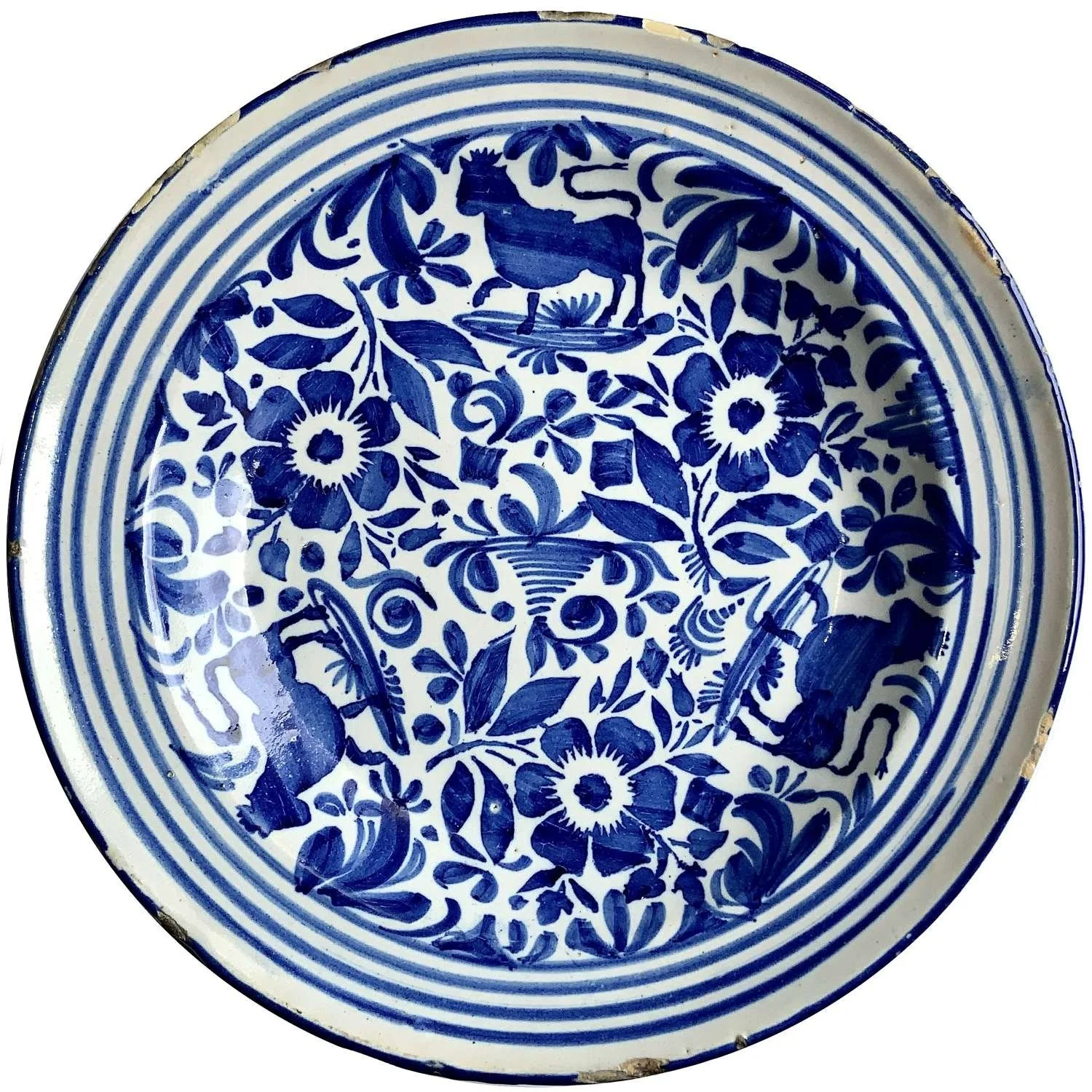
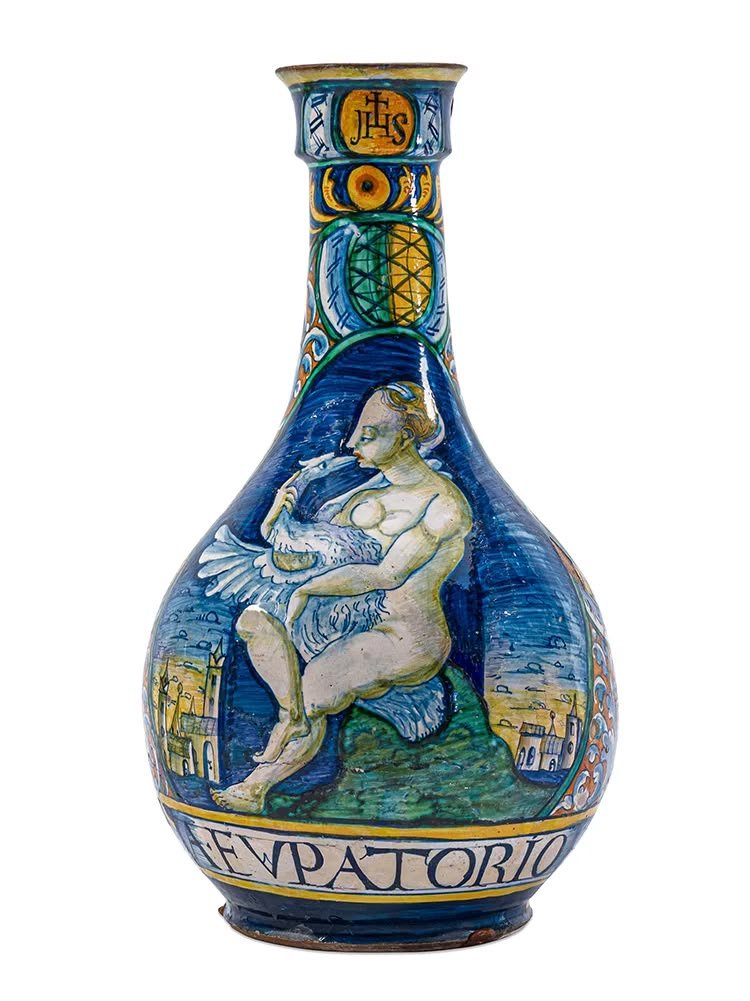
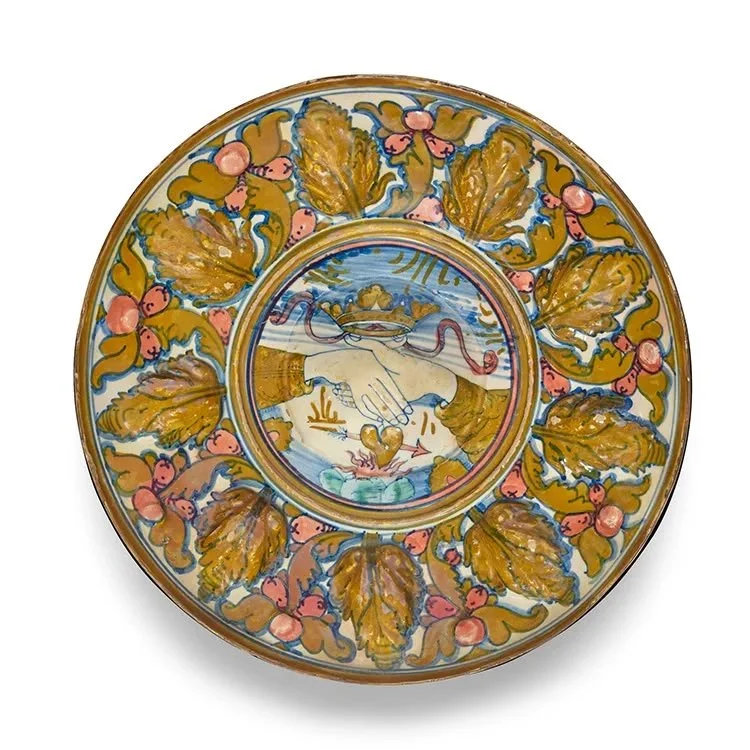
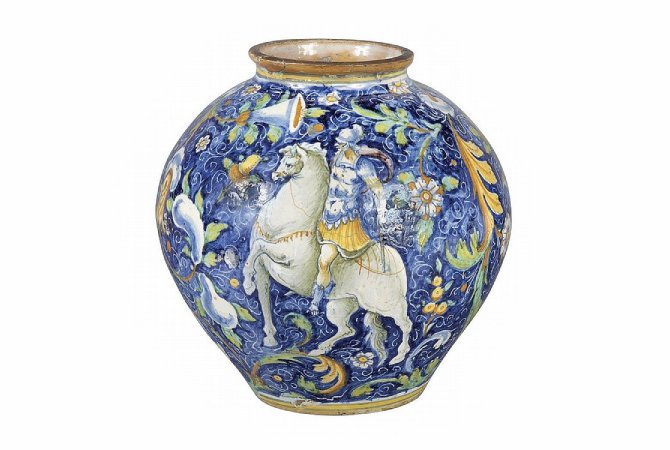
The first and oldest type of majolica (often referred to as “maiolica”) incorporated a process involving two firings of the piece. A tin glaze was painted over earthenware clay which resulted in an opaque white finish after the first firing. This white base could then be decorated and fired again to produce pieces with a more porcelain-like feel.
Victorian Lead Glazed Majolica
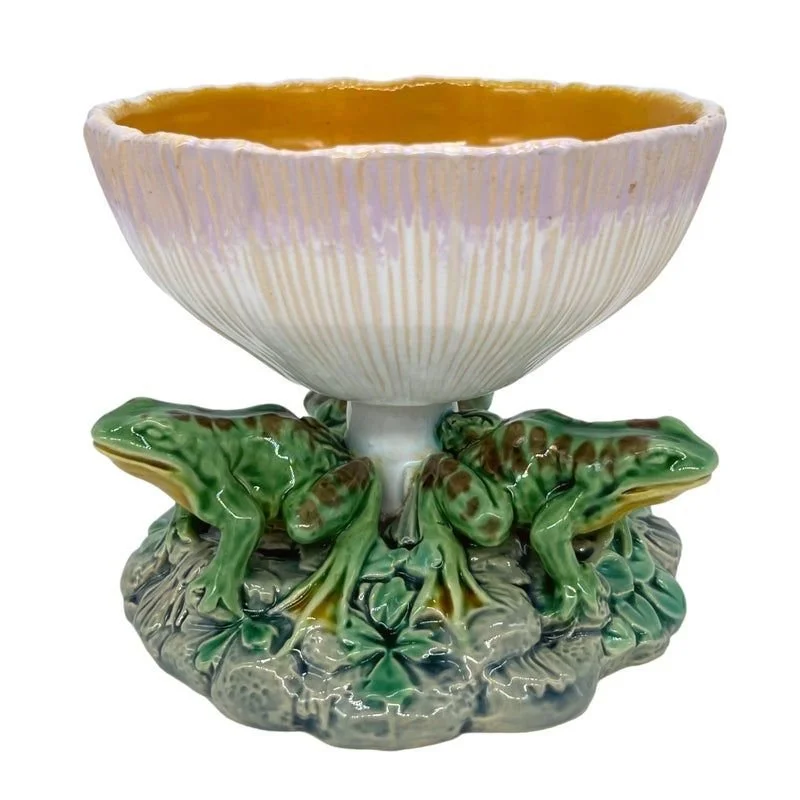
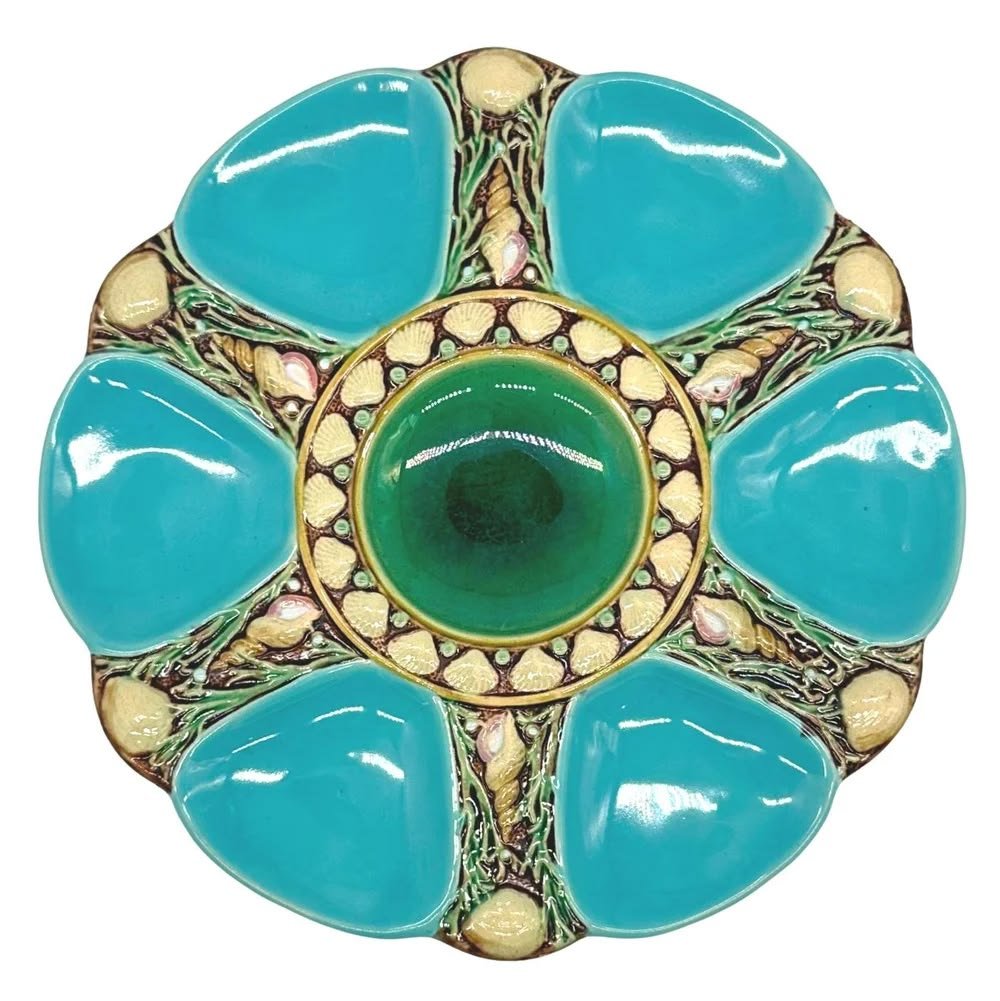
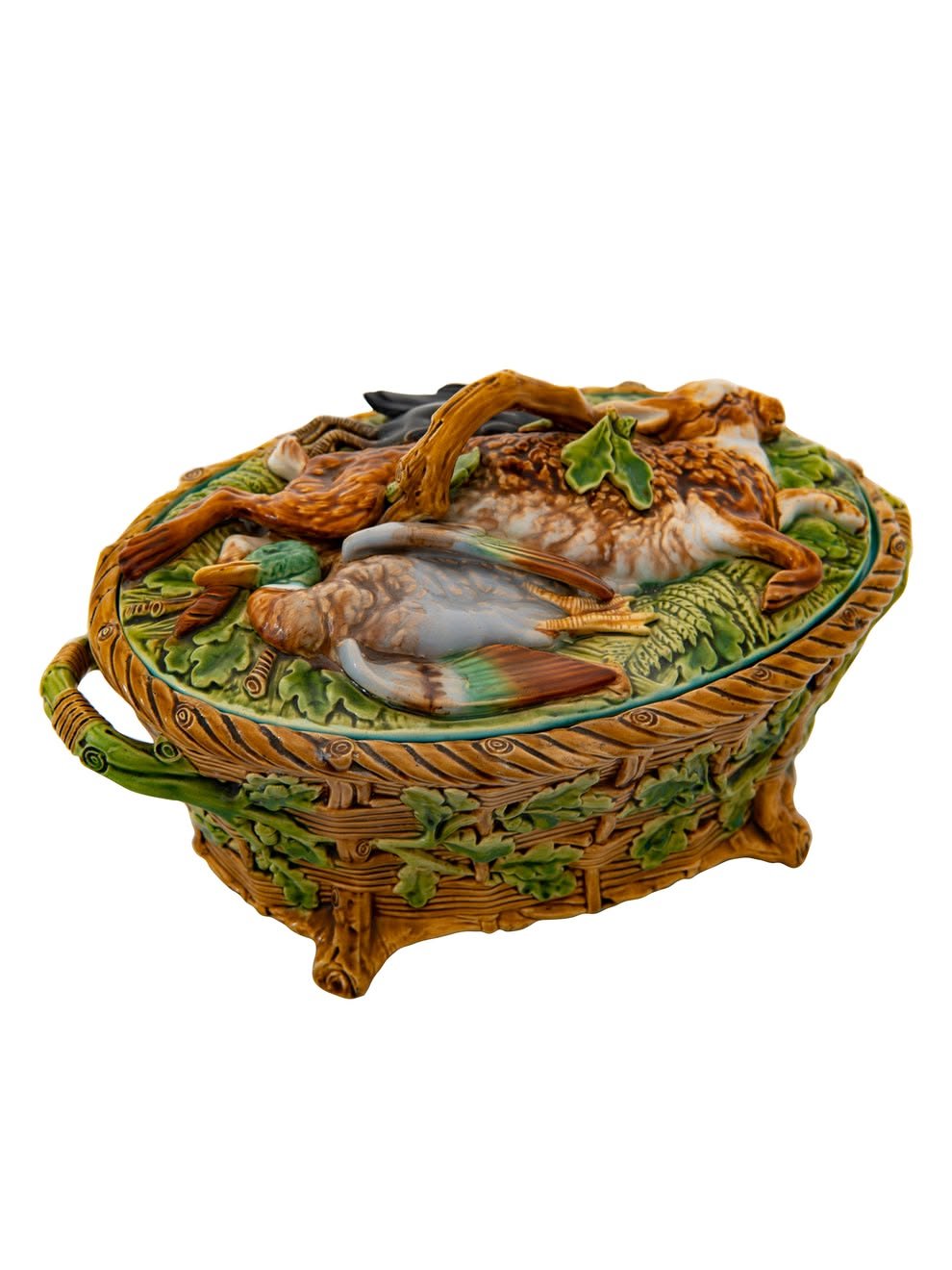
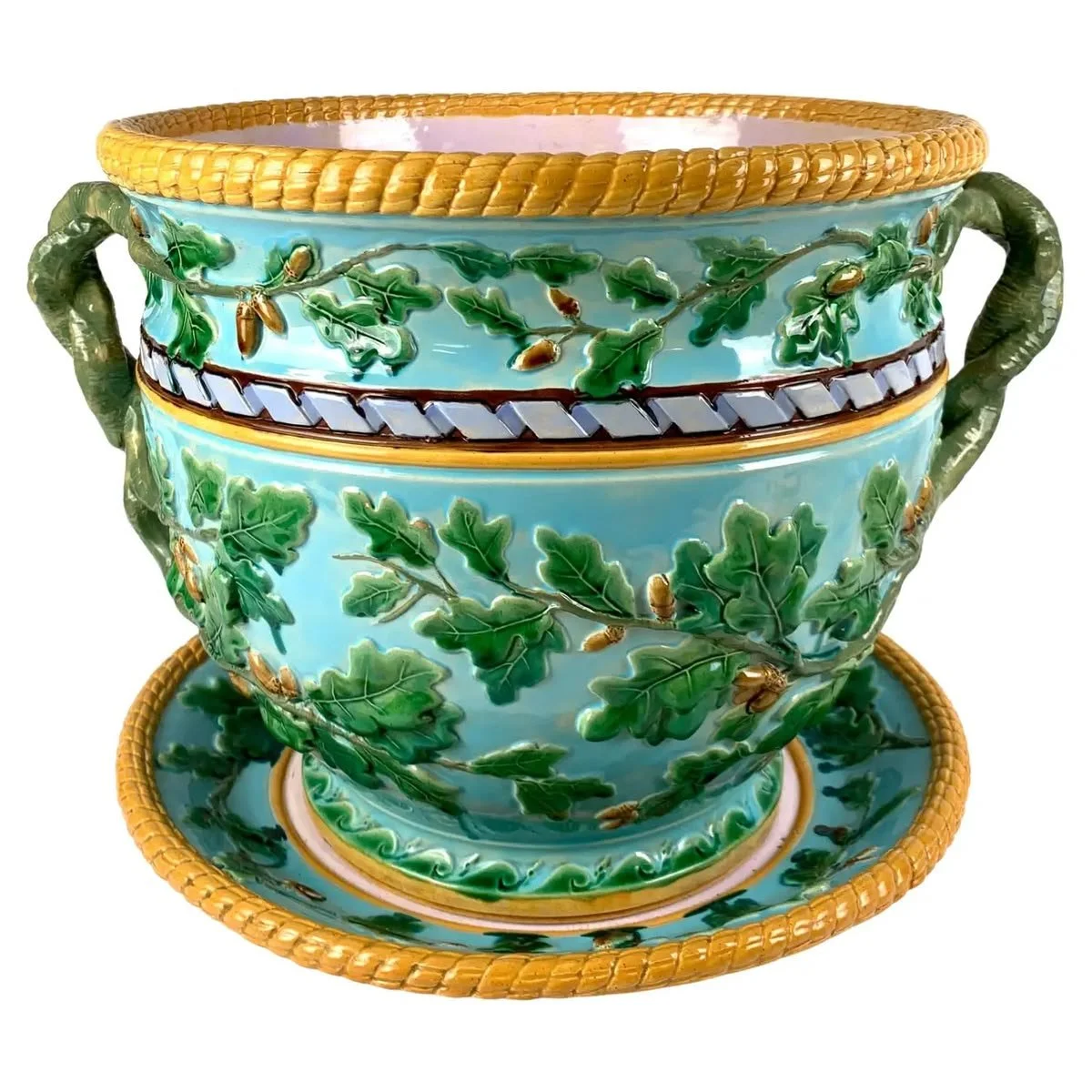
Later, in Britain, Thomas Minton and his company discovered a lead glaze which resulted in a simpler process as the colorful glazes could simply be applied to the base clay and fired only once. Minton presented his discovery at the first Great Exhibition in London in 1851 and from there the popularity of these brightly colored and innovative pieces spread.
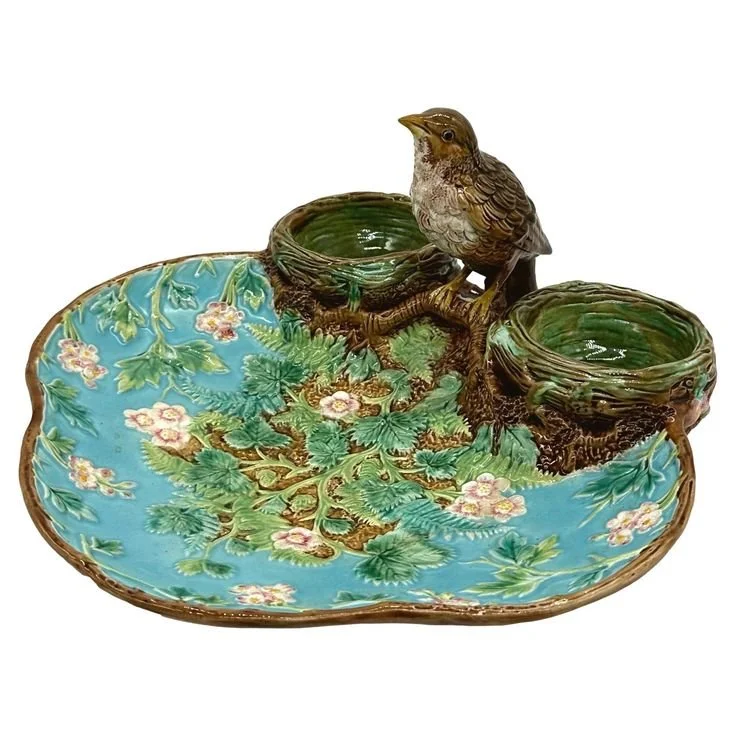
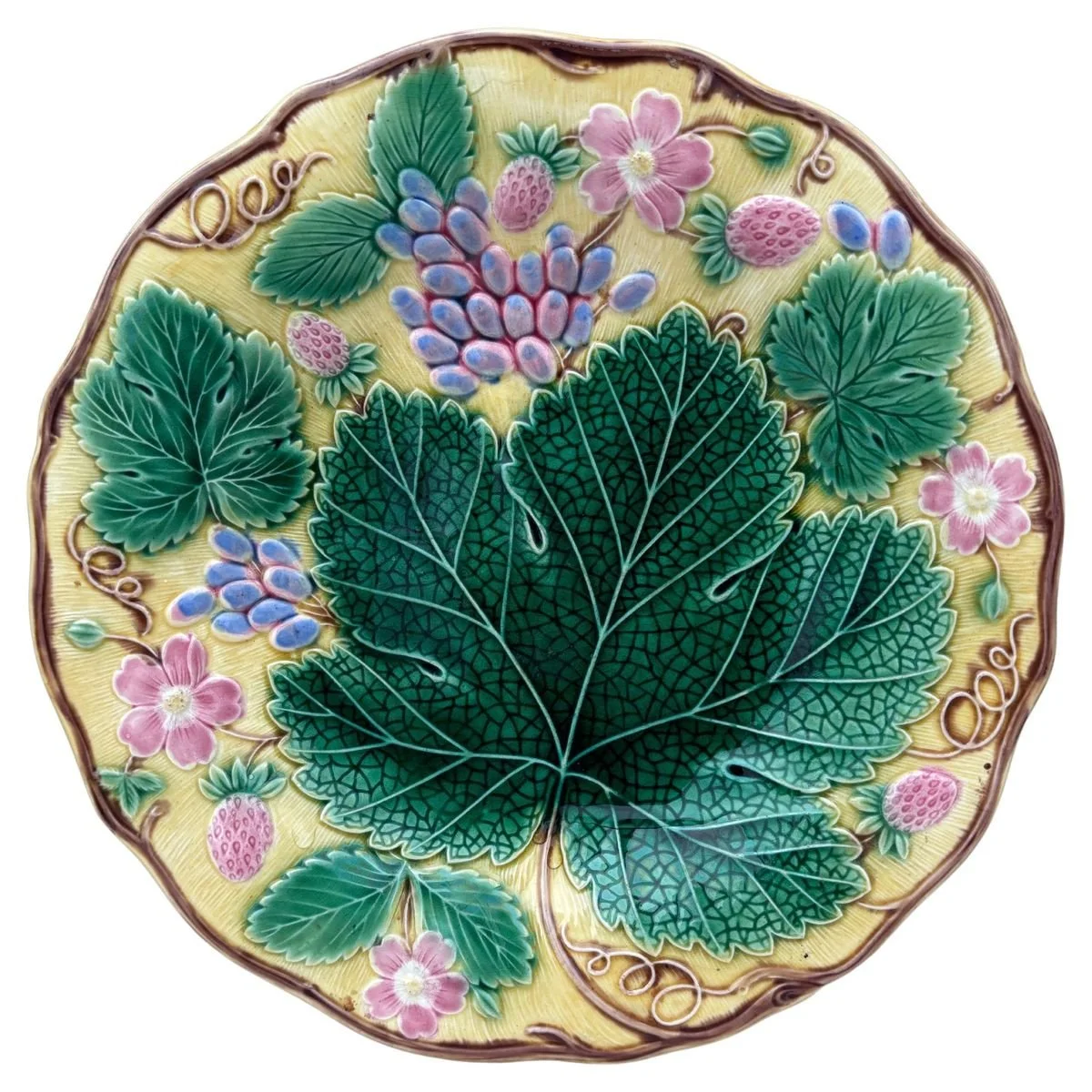
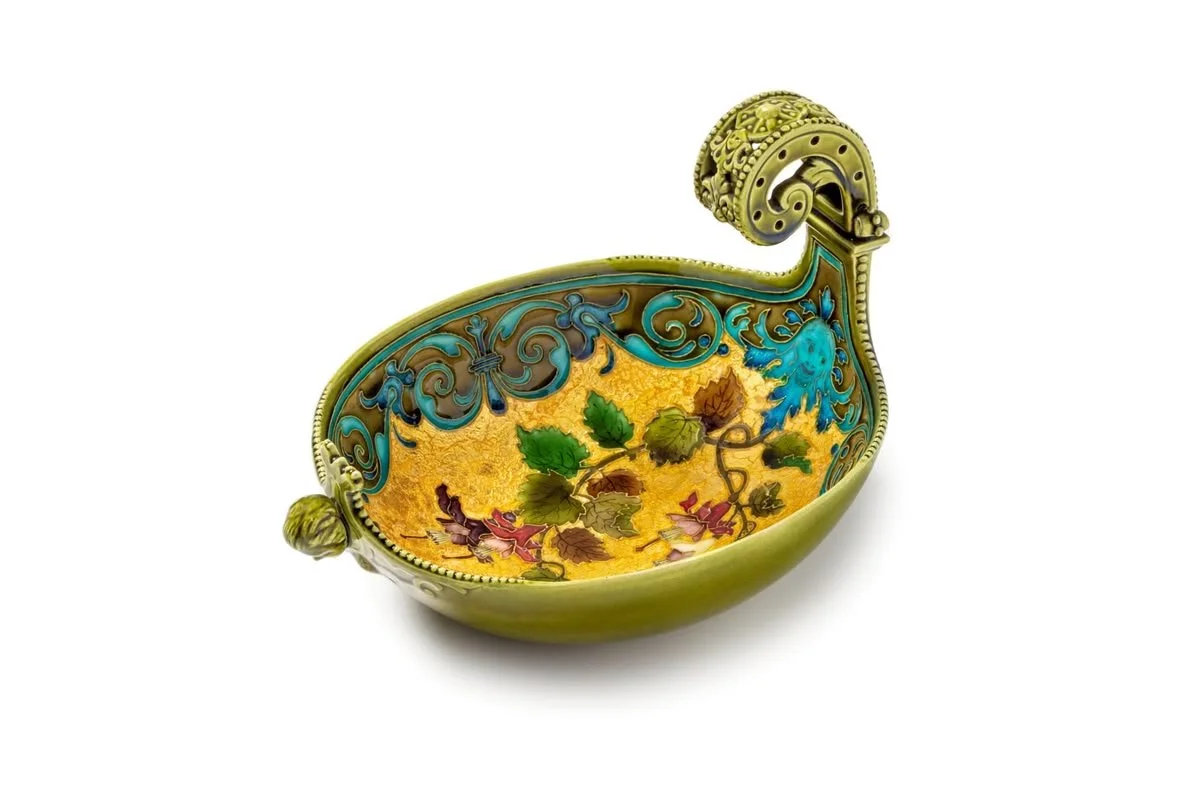
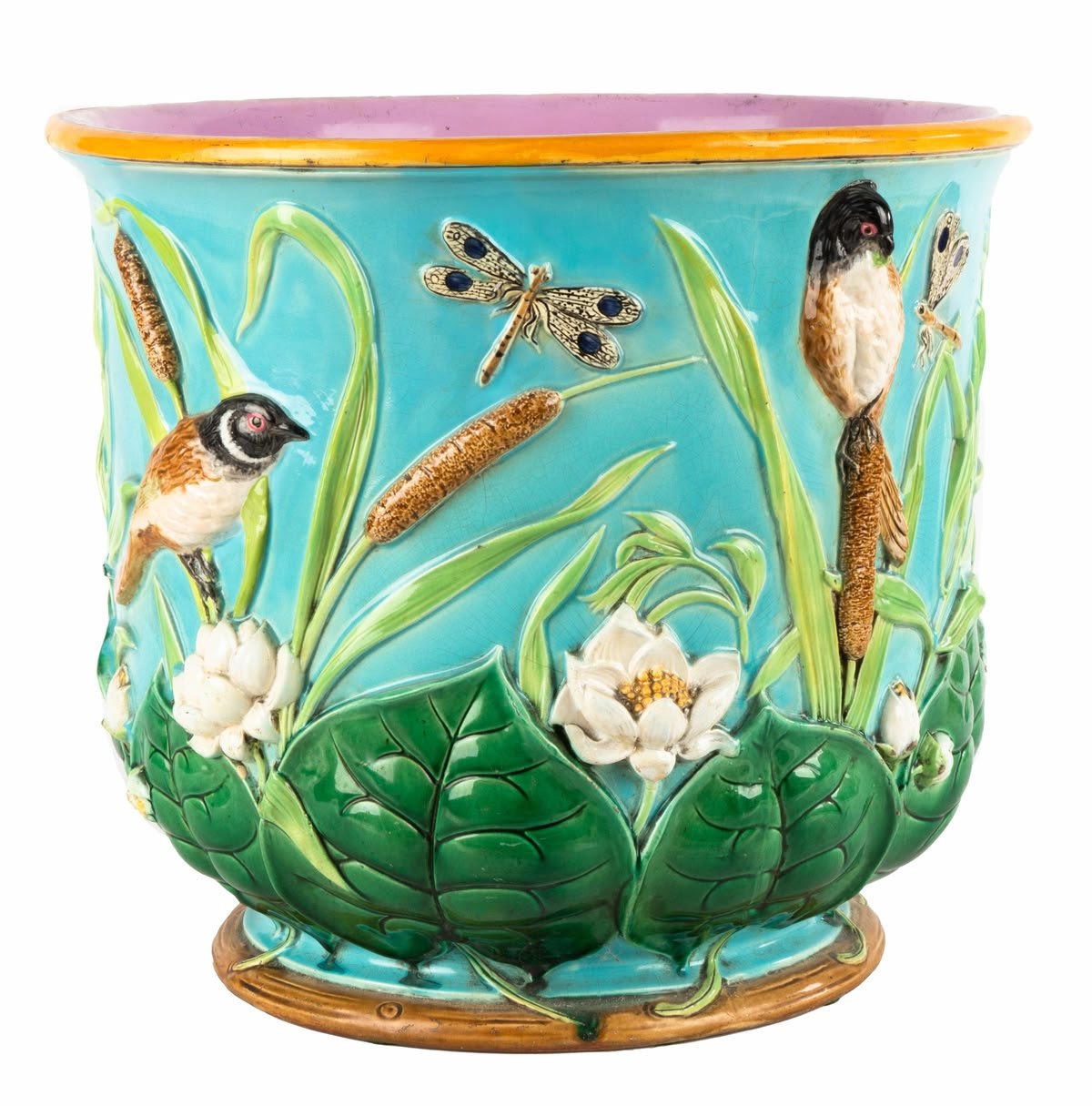
As the popularity spread, so did the companies manufacturing the new lead glazed majolica. In addition to Minton & Co., other prestigious pottery firms such as Wedgwood, George Jones and Sèvres all became known for their production of majolica wares.
Modern Popularity of Majolica
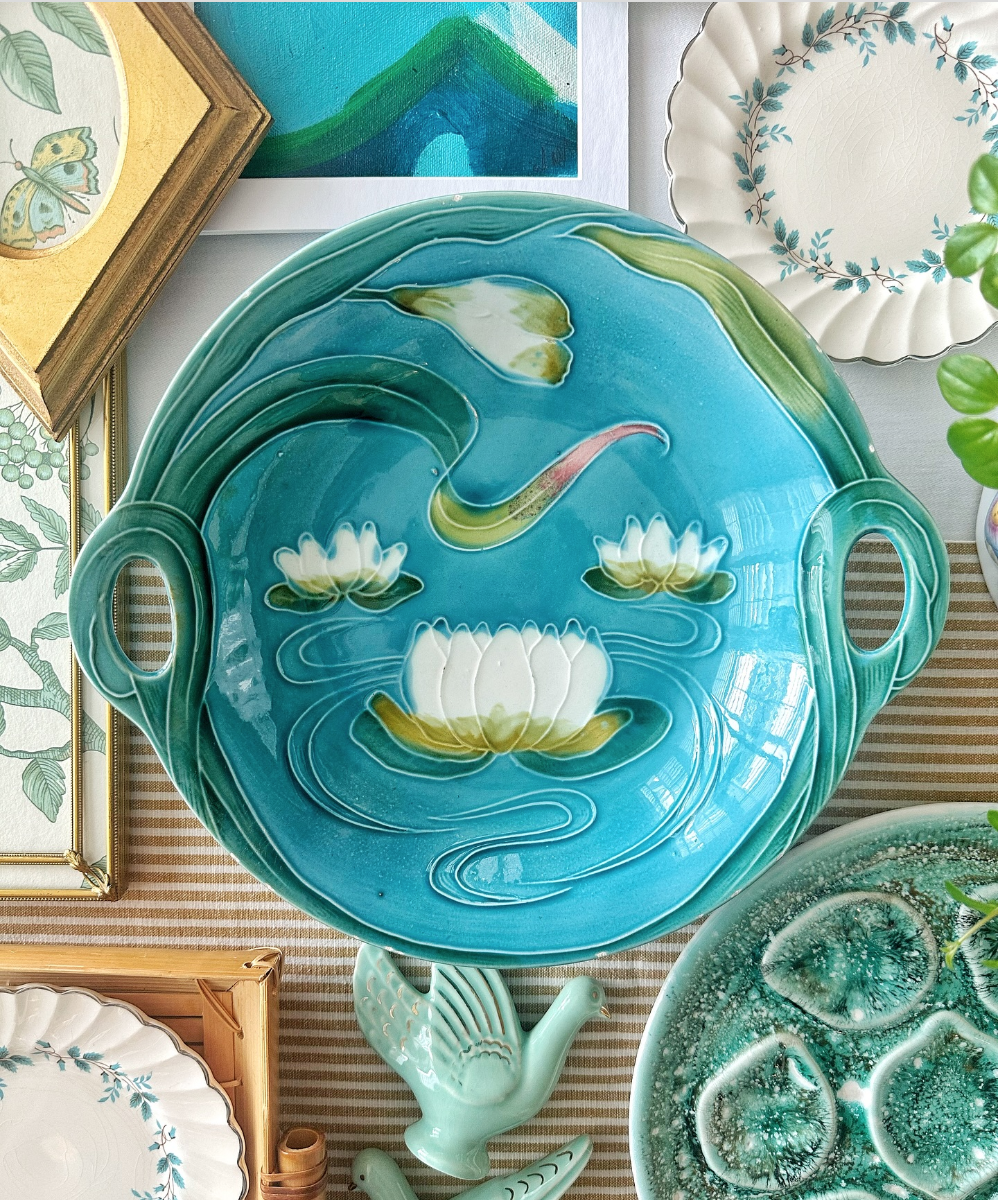
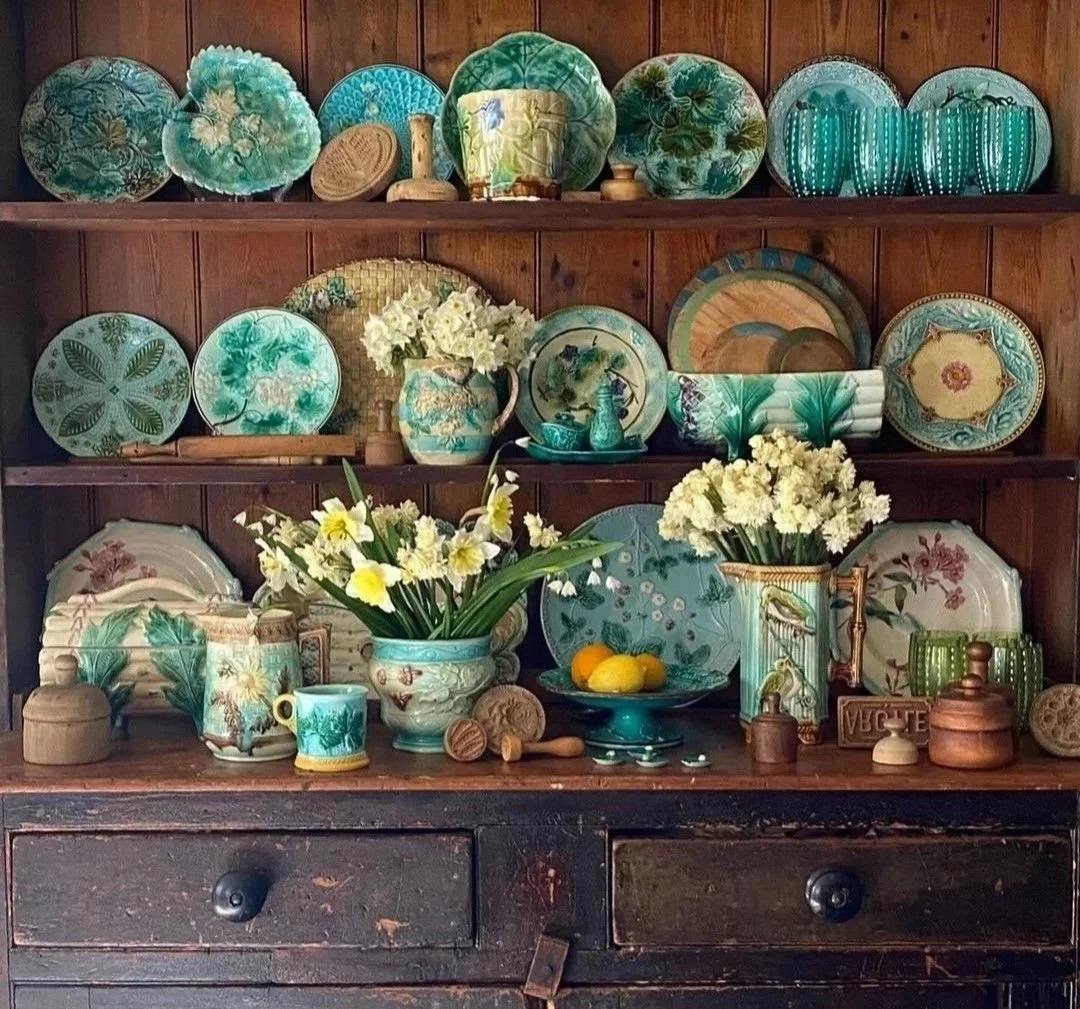
Today, majolica pieces are highly sought after pieces adding a pop of color and sophistication to any space—whether showcasing a single piece or displayed en masse as expertly done by Sharon Randall (click on image above).
If you, too, are intrigued by the allure of majolica, follow Sharon on Instagram as she has an incredible collection and keep your eye out at estate sales, antique stores and online for the perfect piece to elevate your design space. Here are a few pieces we currently have in our online shop (click to see listings)…